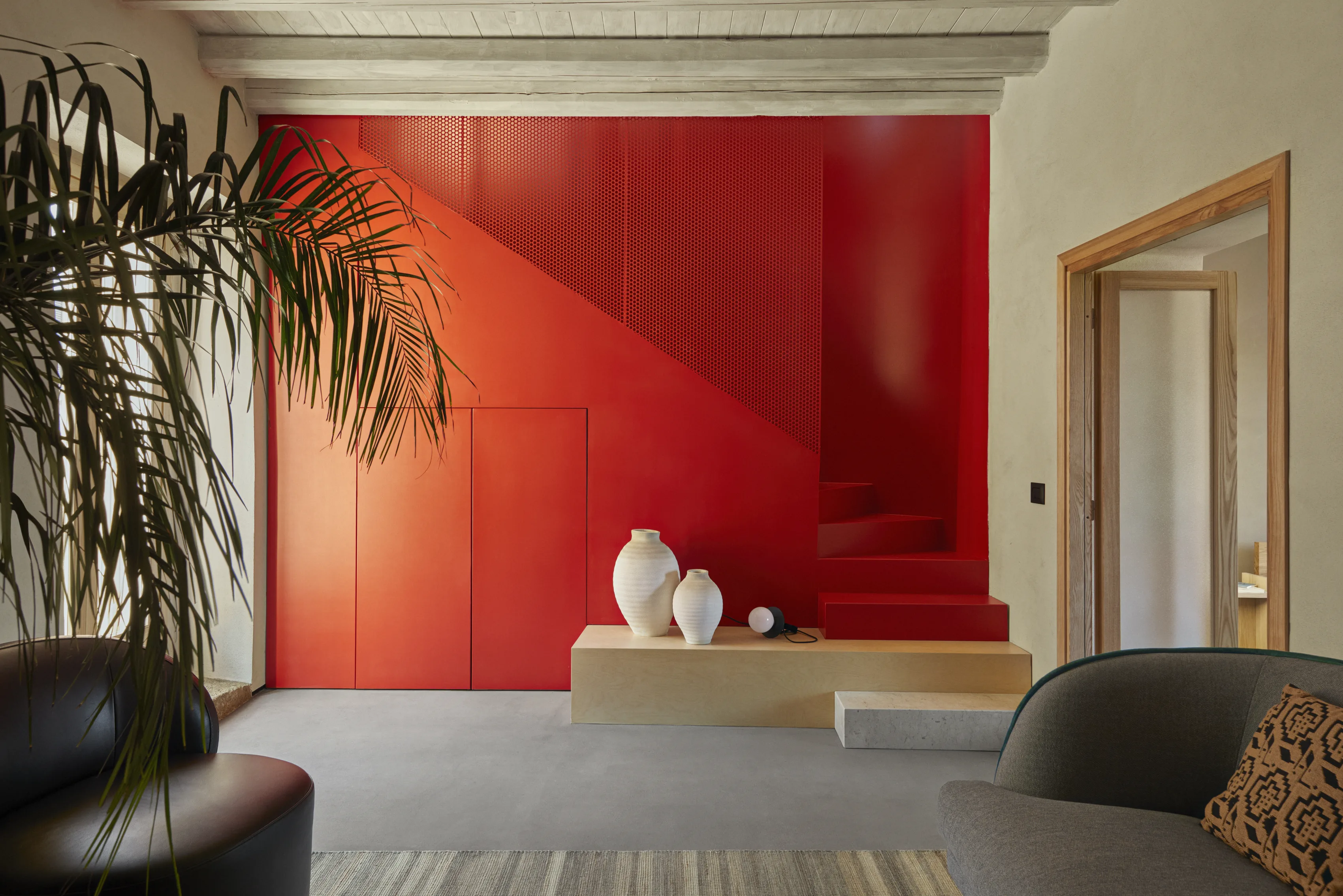
A fine settembre Domus ha scelto nove luoghi dell'architettura italiana aperti durante le Giornate d'Autunno del FAI. Edifici che normalmente restano chiusi. Quasi tutti sopravvivono per una ragione sola: qualcuno li usa, li mantiene, li abita. È da lì che partiamo.In late September Domus picked nine Italian buildings opening during the FAI autumn weekend. Places that are usually closed. Almost all survive for one reason: somebody uses them, maintains them, lives in them. That is where we start.
Perché un edificio chiuso si ammalaWhy a closed building decays
Nelle due giornate di ottobre si aprono palazzi, complessi religiosi, manufatti del lavoro e delle infrastrutture. Molti sono leggibili solo in quelle ore, perché la proprietà privata o l'uso istituzionale ne limitano l'accesso. Come racconta Domus questa settimana, il filo che li tiene insieme non è lo stile né l'epoca: è il fatto che esistano ancora.Over two days in October, palaces, religious complexes and industrial or infrastructural structures open their doors. Many can only be read in those few hours, because private ownership or institutional use normally restricts access. As Domus notes this week, what links them is not style or period: it is the simple fact that they are still standing.
Un edificio vuoto non riposa. Si ammala. L'umidità sale perché nessuno apre le finestre, le gronde si otturano, una tegola spostata diventa in tre inverni una trave marcia. Nel nostro lavoro abbiamo visto murature in pietra sopravvivere a due secoli e cedere in dieci anni di abbandono. La manutenzione non è un costo accessorio: è la condizione perché la materia storica resti materia.An empty building does not rest. It sickens. Damp rises because nobody opens the windows, gutters block, a slipped tile becomes a rotten beam within three winters. In our work we have seen stone walls survive two centuries and then fail after ten years of neglect. Maintenance is not an accessory cost: it is the condition under which historic fabric stays fabric.
Cambiare funzione senza tradire le proporzioniChanging use without betraying proportions
Un edificio antico resta vivo cambiando funzione. Ma la funzione nuova va scelta leggendo l'edificio, non il mercato. Una chiesa sconsacrata ha un'aula unica, alta, con luce dall'alto: diventa bene un luogo di lavoro collettivo, male una sequenza di stanzette. Ad Alcamo, dentro le mura di una chiesa del Cinquecento, abbiamo lavorato per sottrazione: il volume resta uno, gli arredi non toccano le murature storiche.An old building stays alive by changing use. But the new use has to be chosen by reading the building, not the market. A deconsecrated church has a single tall nave lit from above: it makes a good collective workplace and a poor warren of small rooms. In Alcamo, inside the walls of a sixteenth-century church, we worked by subtraction: the volume stays whole, and the new furniture never touches the historic masonry.
La regola che ci diamo è semplice. Tutto ciò che aggiungiamo deve essere riconoscibile e, in teoria, rimovibile. Impianti a vista o in canalizzazioni dedicate, controsoffitti staccati dalle volte, bagni e cucine raccolti in volumi autonomi. Chi verrà dopo di noi deve poter capire dove finisce il Settecento e dove comincia il nostro intervento.The rule we set ourselves is simple. Everything we add must be legible and, in principle, removable. Services exposed or run in dedicated chases, suspended ceilings detached from vaults, bathrooms and kitchens gathered into free-standing volumes. Whoever comes after us should be able to see where the eighteenth century ends and our work begins.
Un edificio non si conserva chiudendolo. Si conserva usandolo.You don't preserve a building by closing it. You preserve it by using it.
Cosa significa per chi compra una casa antica in SiciliaWhat it means if you buy an old house in Sicily
In Sicilia e nelle isole il patrimonio non manca. Manca spesso la lettura preventiva. Prima di firmare un compromesso consigliamo sempre tre verifiche: il regime di tutela dell'immobile, lo stato delle coperture e dei solai, la provenienza dell'acqua e dell'umidità. Sono tre domande che si rispondono in un sopralluogo e che spostano il budget più di qualunque scelta di finitura.In Sicily and the islands there is no shortage of heritage. What is often missing is a proper reading beforehand. Before signing, we always suggest three checks: the building's protection status, the condition of roofs and floor structures, and where water and damp come from. Three questions answered in a single site visit, and they shift the budget more than any finish ever will.
Un immobile vincolato non è un immobile bloccato. Vuol dire che le scelte vanno concordate con la Soprintendenza e documentate: tempi più lunghi in autorizzazione, materiali più sorvegliati, ma anche un progetto che regge nel tempo. A Sambuca di Sicilia abbiamo recuperato una vecchia abitazione del centro storico portandola a un uso ricettivo contemporaneo senza alterarne l'impianto.A listed building is not a frozen building. It means choices must be agreed with the heritage authority and documented: longer approval times, more scrutiny over materials, but also a project that holds up over time. In Sambuca di Sicilia we restored an old house in the historic centre for contemporary guest use without altering its original layout.
Per chi arriva dall'estero il nodo è quasi sempre lo stesso: capire cosa si può fare prima di innamorarsi di un rudere. Abbiamo raccolto dati, costi e passaggi nella pagina su come investire in Sicilia, perché la differenza tra un buon affare e una trappola si misura in fase di analisi, non di cantiere.For buyers coming from abroad the question is almost always the same: understanding what can be done before falling in love with a ruin. We have gathered figures, costs and steps on our page about investing in Sicily, because the gap between a good deal and a trap is measured during analysis, not on site.
Il costo vero del restauro conservativoThe real cost of conservative restoration
Il restauro conservativo costa più di una ristrutturazione ordinaria per una ragione tecnica, non estetica: si lavora a mano, su materia irregolare, con lavorazioni che non si possono industrializzare. Rifare un intonaco in calce su una muratura in pietra richiede tempi di presa che nessuna fretta accorcia. Chi promette tempi da nuova costruzione su un edificio del Seicento sta sottovalutando qualcosa.Conservative restoration costs more than an ordinary refurbishment for a technical reason, not an aesthetic one: the work is done by hand, on irregular fabric, with processes that cannot be industrialised. Rendering a stone wall in lime requires curing times that no amount of urgency will shorten. Anyone promising new-build timescales on a seventeenth-century building is underestimating something.
La sorpresa, però, non è il prezzo: è la sua variabilità. Per questo fissiamo la previsione economica all'inizio, con una contingenza tecnica che si riduce man mano che il progetto si definisce. Sull'esistente la contingenza serve davvero, perché un solaio si conosce solo quando lo si apre. Il nostro metodo in otto fasi nasce esattamente da questa incertezza, per renderla governabile.The surprise, though, is not the price: it is how much it can vary. That is why we fix the financial forecast at the start, with a technical contingency that narrows as the design firms up. On existing buildings that contingency earns its keep, because you only know a floor structure once you open it. Our eight-stage method was built around exactly this uncertainty, to make it manageable.
Aprire le porte è già un atto di progettoOpening the doors is already design
Le aperture straordinarie funzionano perché costringono a guardare. Un edificio che riceve visitatori viene pulito, illuminato, raccontato: tre operazioni che da sole non restaurano nulla, ma che riaccendono l'interesse di chi potrà finanziarne il recupero. Al Sud e nelle isole questo passaggio conta il doppio, perché spesso il valore di un immobile è noto solo a chi gli passa davanti ogni giorno.These one-off openings work because they force people to look. A building that receives visitors gets cleaned, lit and explained: three acts that restore nothing on their own, but that rekindle the interest of those who might fund its recovery. In the South and the islands this matters twice over, because a building's value is often known only to those who walk past it daily.
Dal nostro osservatorio tra Palermo e Valletta vediamo la stessa dinamica ripetersi: un edificio torna utile, e intorno torna utile anche la strada. Non serve un progetto grande. Serve un progetto giusto, e qualcuno disposto a mantenerlo negli anni successivi al taglio del nastro.From where we sit, between Palermo and Valletta, we see the same pattern repeat: a building becomes useful again, and the street around it follows. It does not take a grand project. It takes the right one, and someone willing to maintain it in the years after the ribbon is cut.
Si può ristrutturare un edificio storico vincolato?Can you renovate a listed historic building?
Sì. Il vincolo non impedisce l'intervento: richiede che ogni scelta — materiali, impianti, aperture, nuovi usi — sia autorizzata dalla Soprintendenza competente e documentata nel progetto. I tempi di autorizzazione si allungano, ma l'intervento resta possibile e spesso più solido, perché obbliga a una lettura accurata dell'edificio prima del cantiere.Yes. Listing does not prevent work: it requires every choice — materials, services, openings, new uses — to be authorised by the heritage authority and documented in the design. Approval takes longer, but the work remains possible and is often sounder, because it forces a careful reading of the building before site work begins.
Quanto costa il restauro conservativo di una casa in pietra?How much does restoring a stone house cost?
Dipende dallo stato di coperture, solai e murature, che si valuta solo con un sopralluogo. Il restauro conservativo costa più di una ristrutturazione ordinaria perché molte lavorazioni sono manuali e non comprimibili nei tempi. Noi fissiamo una previsione iniziale con contingenza tecnica, che si riduce man mano che il progetto si definisce.It depends on the state of the roof, floor structures and walls, which only a site visit can establish. Conservative restoration costs more than standard refurbishment because much of the work is manual and cannot be rushed. We set an initial forecast with a technical contingency that narrows as the design develops.
Si può trasformare un palazzo storico in struttura ricettiva?Can a historic palazzo become a guesthouse or hotel?
Spesso sì, ed è uno dei riusi più compatibili con l'impianto di un edificio antico, che per sua natura ha stanze passanti e volumi generosi. Vanno verificati destinazione urbanistica, requisiti igienico-sanitari, accessibilità e vie di fuga. Bagni e cucine conviene concentrarli in volumi autonomi, per non intaccare murature e volte.Often yes, and it is one of the uses most compatible with an old building's layout of interconnected rooms and generous volumes. You need to check planning designation, health and safety requirements, accessibility and escape routes. Bathrooms and kitchens are best grouped into free-standing volumes, so masonry and vaults stay untouched.
Avete messo gli occhi su una casa antica in Sicilia? Parliamone prima del rogito.Have you found an old house in Sicily? Let's talk before you sign.
ParliamoneLet's talk →Foto di copertina: Studio Didea, Sambuca Airbnb, Sambuca di Sicilia (AG).Cover photo: Studio Didea, Sambuca Airbnb, Sambuca di Sicilia (AG).