A Palma di Maiorca OHLAB ha messo insieme case preesistenti e pochi volumi nuovi per farne un unico albergo di quartiere. Non è una curiosità spagnola: è il modello che da anni vediamo funzionare nei centri storici siciliani, dove l'esistente è la risorsa e non l'ostacolo.In Palma de Mallorca, OHLAB has stitched existing houses together with a few new volumes to make a single neighbourhood hotel. This isn't a Spanish curiosity: it's the model we've seen working for years in Sicilian old towns, where what already stands is the resource, not the obstacle.
Un albergo fatto di caseA hotel made of houses
Il Terreno Barrio Hotel, nel quartiere di El Terreno a Palma, non occupa un edificio: ne occupa diversi. Case residenziali già costruite, affacciate sulla baia, e alcuni innesti nuovi aggiunti solo dove la ricettività lo richiedeva. Come racconta Dezeen questa settimana, il risultato è un organismo diffuso, che resta dentro la scala domestica della strada invece di cancellarla.The Terreno Barrio Hotel, in Palma's El Terreno district, doesn't occupy one building: it occupies several. Existing houses facing the bay, plus a few new insertions added only where the programme demanded them. As Dezeen reported this week, the outcome is a scattered organism that stays within the domestic scale of the street rather than erasing it.
È un'idea semplice e molto esigente. Semplice perché evita la demolizione e l'edificio-monoblocco. Esigente perché obbliga a pensare per unità: ogni casa ha il suo accesso, i suoi solai, i suoi limiti, e tutte insieme devono comportarsi come un'unica struttura, con un'accoglienza sola e un back of house che le serve tutte.It's a simple idea and a demanding one. Simple, because it avoids demolition and the single-block hotel. Demanding, because it forces you to think in units: each house has its own entrance, its own floor structures, its own limits, and together they must behave as one operation, with one reception and a back of house serving them all.
Perché il sughero non è un vezzoWhy cork isn't a fashion statement
Negli interni di Palma il sughero fa tre mestieri insieme: riveste, isola, assorbe il suono. In una struttura ricettiva ricavata da case di civile abitazione l'acustica è il primo problema reale. Muri sottili, solai in legno o in laterocemento, corridoi stretti: il rumore passa dove non deve. Un materiale naturale che lavora anche sul comfort termico risolve due voci di capitolato con una sola lavorazione.In the Palma interiors, cork does three jobs at once: it clads, it insulates, it absorbs sound. In a hotel carved out of ordinary houses, acoustics are the first real problem. Thin walls, timber or hollow-block floors, narrow corridors: noise travels where it shouldn't. A natural material that also works thermally solves two line items with a single operation.
È la stessa logica del comfort passivo mediterraneo che cerchiamo nei nostri cantieri: massa, inerzia, ombra, ventilazione. Prima si riduce il carico, poi si dimensiona l'impianto. Un ospite non misura i decibel né i gradi, ma riconosce una stanza che sta bene da sola.It's the same passive Mediterranean logic we look for on our sites: mass, inertia, shade, ventilation. Reduce the load first, size the plant afterwards. A guest doesn't measure decibels or degrees, but they recognise a room that behaves well on its own.
Un'aggiunta che non si può spiegare in una frase è solo volume da riscaldare.An addition you can't explain in one sentence is just volume to heat.
Il colore al posto della decorazioneColour instead of decoration
A El Terreno sono campiture piene di colore a distinguere gli ambienti. Nessun apparato decorativo, nessun tema. È una scelta economica oltre che estetica: il colore costa poco, si applica in fretta, si cambia. In una struttura che vive di stagioni e di recensioni, poter rinfrescare l'identità senza aprire un cantiere è un vantaggio concreto.At El Terreno, flat fields of colour tell the spaces apart. No decorative apparatus, no theme. That's an economic choice as much as an aesthetic one: colour is cheap, fast to apply, easy to change. In a business that lives by seasons and reviews, refreshing the identity without opening a building site is a real advantage.
Nel nostro lavoro il principio è lo stesso, anche quando il registro è diverso. A Sambuca di Sicilia, nella casa del centro storico trasformata in struttura ricettiva, l'identità nasce da pochi materiali tenuti puliti e da come la luce li attraversa. Meno elementi significa meno manutenzione e meno possibilità di sbagliare.In our work the principle is the same, even when the register differs. In Sambuca di Sicilia, in the old-town house turned into a guesthouse, the identity comes from a handful of materials kept clean and from how light crosses them. Fewer elements means less maintenance and fewer chances to get it wrong.
Cosa significa per chi investe in SiciliaWhat this means for investors in Sicily
I centri storici siciliani sono pieni di case piccole, contigue, con proprietà frammentate: Palermo, Trapani, Noto, i borghi dell'interno. Il modello dell'albergo diffuso le rende utilizzabili senza chiedere loro di diventare ciò che non sono. Si comprano a lotti, si aprono per fasi, si mette in esercizio la prima unità mentre la seconda è ancora in cantiere.Sicilian old towns are full of small, adjoining houses with fragmented ownership: Palermo, Trapani, Noto, the inland villages. The scattered-hotel model makes them usable without asking them to become something they aren't. You buy in lots, open in phases, start trading with the first unit while the second is still on site.
Il rovescio della medaglia è che ogni edificio ha la sua storia strutturale. Prima di disegnare camere conviene capire come è fatto ciò che si eredita: portanza dei solai, vani scala, cavedi, altezze. Da lì discende il numero di camere, e dal numero di camere discende il conto economico. Non il contrario.The flip side is that every building has its own structural history. Before drawing rooms, it pays to understand how what you inherit is actually built: floor capacity, stairwells, shafts, ceiling heights. The room count follows from that, and the business plan follows from the room count. Not the other way round.
Una struttura diffusa chiede poi una regia operativa: chi pulisce, chi consegna la biancheria, dove sta il deposito, quanti metri percorre il personale ogni giorno. Sono domande che affrontiamo quando progettiamo per l'hospitality, perché la pianta che funziona in render può costare due persone in più in organico.A scattered operation also needs operational direction: who cleans, who delivers linen, where the store is, how many metres staff walk each day. These are the questions we work through when designing for hospitality, because a plan that looks fine in a render can cost you two extra people on the payroll.
Aggiungere solo dove serveAdd only where it's needed
La parte più interessante del progetto di Palma è ciò che non si vede: la decisione di costruire nuovo soltanto dove l'esistente non bastava. Un vano scala, un corpo di servizio, un collegamento. È la stessa disciplina che proviamo a tenere noi: l'innesto nuovo deve avere una funzione dichiarabile in una frase, altrimenti è volume in più da riscaldare e da pagare.The most interesting part of the Palma project is what you can't see: the decision to build new only where the existing fabric fell short. A stair core, a service block, a link. It's the same discipline we try to keep: a new insertion must have a purpose you can state in one sentence, otherwise it's extra volume to heat and to pay for.
Quando il nuovo è poco, può permettersi di essere chiaramente nuovo. Nessuna imitazione, nessun finto antico. Il vecchio resta vecchio con le sue irregolarità, l'aggiunta si dichiara, e il confine fra i due diventa la cosa più bella del progetto.When the new is limited, it can afford to be plainly new. No imitation, no fake patina. The old stays old with all its irregularities, the addition declares itself, and the line between the two becomes the best thing in the project.
Conviene ristrutturare un edificio storico per farne un hotel?Is it worth converting a historic building into a hotel?
Conviene quando la struttura regge il nuovo uso senza stravolgimenti. La verifica va fatta prima: portanza dei solai, scale, altezze, cavedi per gli impianti. Da questi dati nasce il numero di camere, che è la vera variabile economica. Partire dal numero di camere desiderato, e non da ciò che l'edificio consente, è l'errore più costoso.It is, when the structure can take the new use without being torn apart. Check first: floor capacity, stairs, ceiling heights, shafts for services. Those figures give you the room count, which is the real economic variable. Starting from the room count you want, rather than what the building allows, is the costliest mistake.
Il sughero funziona davvero come isolante per le pareti?Does cork really work as wall insulation?
Sì, e lavora su due fronti: riduce la trasmissione del calore e assorbe il rumore. In una struttura ricettiva ricavata da case esistenti l'acustica fra camere è spesso il problema più urgente, e un rivestimento che isola e finisce allo stesso tempo evita stratigrafie complicate dove lo spessore disponibile è poco.Yes, and it works on two fronts: it reduces heat transfer and absorbs sound. In a hotel carved out of existing houses, acoustics between rooms are often the most urgent problem, and a lining that insulates and finishes at once avoids complicated build-ups where there's little depth to play with.
Che cos'è un albergo diffuso e quando ha senso?What is a scattered hotel and when does it make sense?
È una struttura ricettiva distribuita su più edifici vicini, con una sola accoglienza e una gestione unica. Ha senso nei centri storici con immobili piccoli e frammentati, perché permette di aprire per fasi e di iniziare a incassare con le prime unità. Richiede però una logistica di servizio studiata, altrimenti i costi di gestione salgono.It's a hotel spread across several nearby buildings, with one reception and one management. It makes sense in old towns with small, fragmented properties, because you can open in phases and start earning from the first units. It does require carefully planned service logistics, or running costs climb.
State valutando un edificio da trasformare in struttura ricettiva in Sicilia? Parliamone prima di comprare.Looking at a building to turn into a guesthouse in Sicily? Let's talk before you buy.
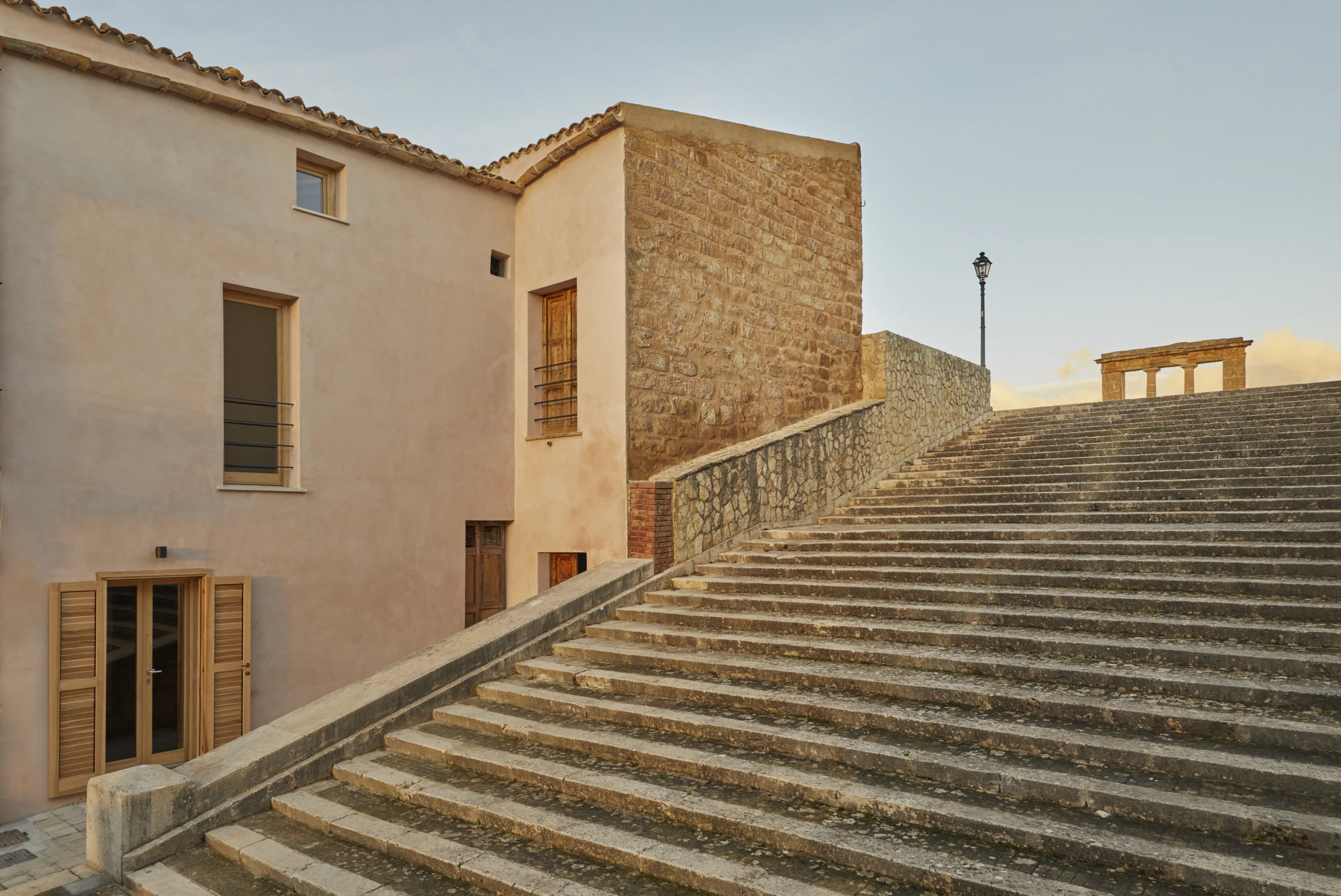
ParliamoneLet's talk →Foto di copertina: Studio Didea, Sambuca Airbnb, Sambuca di Sicilia (AG).Cover photo: Studio Didea, Sambuca Airbnb, Sambuca di Sicilia (AG).